Invasive plants do not need much encouragement. Give them a little sun, disturbed soil, and room to spread, and they can take over a fenceline, garden bed, woodlot edge, or back pasture before you know it. For landowners, gardeners, and homesteaders who want to reclaim their ground without relying on chemical treatments, the answer is steady, hands-on land management.
Learning how to remove invasive plants the right way starts with three things: knowing what you are dealing with, cutting or digging at the right time, and using tools tough enough for the work. With the Woodman’s Pal machete and heavy-duty gardening hoe, you can remove invasive plants naturally while protecting the native plants you want to keep.
Common Invasive Plants to Watch For on Your Property
Every region has its own problem plants, so the first step is identifying what grows where you live. Local extension offices and invasive plant databases are helpful resources, especially if you are unsure whether a plant is invasive, native, or simply aggressive.
That said, many property owners run into the same types of troublemakers:
Invasive Vines
Vines can climb trees, smother shrubs, and form thick mats along the ground. Watch for fast-growing vines that wrap around trunks, pull down branches, or spread across open areas. Common examples include Oriental bittersweet, Japanese honeysuckle, English ivy, and kudzu in regions where they are established.
Look for vines that:
- Grow quickly over fences, trees, or garden structures.
- Wrap tightly around trunks or stems.
- Produce thick tangles that block sunlight.
- Re-root where stems touch soil.
Thorny Shrubs and Thickets
Multiflora rose, Japanese barberry, autumn olive, privet, and invasive honeysuckle shrubs can form dense stands that crowd out native trees, wildflowers, and young saplings. These plants are often easier to spot in early spring or late fall because many invasive shrubs leaf out earlier or hold leaves longer than nearby native plants.
Look for shrubs that:
- Form dense, nearly impassable thickets.
- Spread along woodland edges, trails, and field borders.
- Produce large amounts of berries or seeds.
- Crowd out young native growth underneath.
Thick Canes and Stalks
Some invasive plants grow in cane-like stems or tall, hollow stalks. Japanese knotweed is one of the most notorious examples. Bamboo-like stems, fast spreading patches, and regrowth from small root or rhizome fragments are all warning signs.
Look for plants that:
- Grow in tight colonies.
- Have hollow or jointed stems.
- Return quickly after being cut.
-
Spread outward year after year.
Groundcovers and Shallow-Rooted Spreaders
Not every invasive plant towers over the landscape. Some stay low, spreading through shallow roots, runners, or mats of foliage. Plants like English ivy, periwinkle, goutweed, wintercreeper, creeping Jenny, and Japanese stiltgrass can creep into garden beds, around trees, and along walkways, making them easy to overlook until they have already started crowding out desirable growth.
Look for groundcovers that:
- Form thick mats.
- Spread faster than nearby plants.
- Root at nodes along the stem.
- Smother seedlings and low native plants.
Why Timing Matters When Cutting Invasive Plants
Cutting invasive plants is not just about swinging a blade and clearing what you see. Timing can make a real difference in how much energy the plant has stored and how quickly it regrows.
For many woody and perennial invasive plants, cutting during the growing season can help reduce the plant’s energy reserves. Once a plant has fully leafed out, it has spent energy pushing out new growth. Cutting it back at that point forces it to draw on stored reserves again if it tries to resprout.
Late winter and early spring can also be useful times for clearing, especially when dense growth is easier to see, and native plants are dormant. This can make it easier to work through a tangled area without accidentally damaging desirable plants.
The main thing to remember is that one cutting is rarely the whole job. Invasive plants are persistent. A cut stem may resprout. A root fragment may send up new growth. Seeds already in the soil may germinate later. Plan on checking the area again throughout the season and repeating the work as needed.
How to Slice Through Thick Canes, Vines, and Shallow Roots
When people ask how to remove invasive plants without chemicals, the honest answer is that the right tool matters. A flimsy blade or a lightweight garden tool can turn a hard job into a frustrating one.

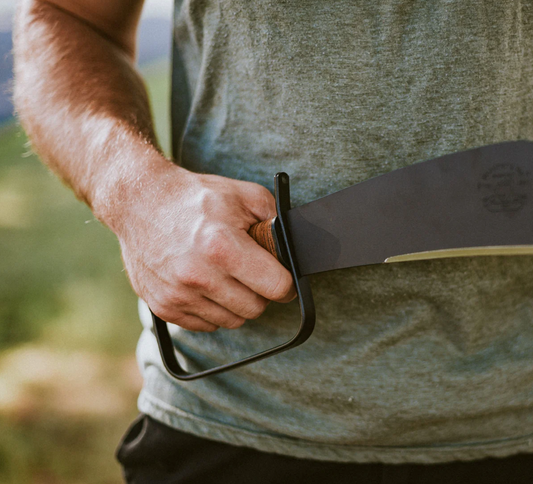
The Woodman’s Pal machete is built for the kind of cutting that invasive plant control often requires. Its balanced design is made for clearing brush, trimming, thinning, chopping, and pruning, while the chisel-sharp sickle hook can trim vines and growth, then help pull and stack cut material. The tool is also designed to chop saplings up to 1 ½” in diameter with a single stroke and handle larger brush through repeated notching. Plus, it’s available with two handle options: a stacked leather handle with a steel knuckle guard and an ash wood handle with finger grooves.
Use the Woodman’s Pal Machete for:
- Cutting vines away from trees.
- Clearing brambles, briars, and dense brush.
- Chopping small saplings and woody stems.
- Trimming back overgrown paths and fence lines.
- Pulling cut vines or brush into manageable piles.
For invasive plants with shallow roots or tough root crowns, the Woodman’s Pal gardening hoe gives you a different kind of advantage. Its double-blade design includes a narrow edge for precise root cutting and weeding, along with a wider edge for trenching, sod breaking, and soil turning. The 60” premium ash wood handle provides leverage and allows you to work more upright, while the steel head is made to slice through tough roots, compacted sod, and heavy clay.

Use the Heavy-Duty Gardening Hoe for:
- Cutting shallow roots below the soil surface.
- Loosening compacted ground around invasive growth.
- Breaking up overgrown sod.
- Reclaiming garden beds.
- Reaching into brambles and briars without getting tangled.
- Clearing debris from under shrubs, fences, and hard-to-reach edges.
Techniques for Clearing Dense Growth While Protecting Native Plants
Responsible land clearing is not about stripping everything down to bare dirt. The goal is to remove the invasive growth while giving native plants, trees, and soil life a better chance to recover.
Work in Sections
Do not try to clear an entire overgrown area in one pass. Start with a small section, especially if native plants are mixed in with the invasive growth. This makes the work safer, more manageable, and less likely to disturb desirable plants. Cut a path into the edge of the growth, then work inward. As you clear, step back often and look for young trees, native shrubs, wildflowers, or grasses worth protecting.
Cut Vines Before Pulling Them
When vines are climbing trees, cut them near the base first. Avoid yanking heavy vines down from branches, since that can break limbs or damage bark. After cutting the vine, let the upper growth die back naturally when needed, then remove what you can safely reach. The sickle hook on the Woodman’s Pal machete is especially useful for trimming and pulling vines once they have been cut.
Remove Seed Heads and Berries Carefully
If invasive plants are already producing seeds or berries, handle the cut material with care. Shaking, dragging, or tossing seed-heavy branches across freshly cleared ground can spread seeds right back into the area you just opened up. Bag or dispose of seed-bearing material according to local guidance. For plants that spread through roots or rhizomes, avoid chopping them into pieces and leaving fragments behind. Some species can regrow from small sections.
Protect the Soil
Bare soil invites new weeds and invasive plants. After clearing, cover exposed ground with mulch, leaf litter, or native plantings where appropriate. Replanting with native species can help reduce open space and make it harder for invasive plants to return.
Clean Your Tools Before Moving to a New Area
Seeds, soil, and root fragments can cling to tools, boots, gloves, and tires. Before moving from one part of the property to another, brush off debris and clean your tools. It is a simple habit that helps prevent accidental spread.
Why Manual Land Management Pays Off Over Time
Manual invasive plant control takes effort, but it also gives you something chemicals cannot always provide: a close understanding of your land. You learn where problem plants are spreading, which areas recover quickly, where native plants are returning, and which spots need more attention.
The long-term benefits include:
- Less chemical use around gardens, waterways, pets, and wildlife.
- Better protection for native plants and young trees.
- Healthier soil structure when clearing is done carefully.
- More control in tight areas where selective removal matters.
- A cleaner, more usable property.
- A repeatable maintenance routine you can manage season after season.
Manual control also makes sense for people who would rather invest in tools that last than depend on short-term fixes. Woodman’s Pal tools are handcrafted in America and built with the kind of durability landowners appreciate. The Woodman’s Pal machete has a history dating back to World War II, and the gardening hoe is made for serious soil work, root cutting, and reclaiming overgrown ground.
A Simple Manual Invasive Plant Control Plan
Use this basic plan as a starting point:
- Identify the invasive plants on your property.
- Mark the native plants you want to protect.
- Cut vines, canes, and woody stems with the Woodman’s Pal Machete.
- Use the Heavy-Duty Gardening Hoe to loosen soil and cut shallow roots.
- Remove seed heads, berries, and root fragments carefully.
- Mulch or replant cleared areas with desirable native plants.
- Recheck the area every few weeks during the growing season.
- Repeat cutting or digging as new growth appears.
Reclaim Your Land the Responsible Way
Knowing how to remove invasive plants starts with patience, timing, and the right tools in hand. Whether you are clearing a garden edge, opening a trail, cleaning up a fenceline, or taking back an overgrown corner of your homestead, manual control gives you a practical way to remove invasive plants naturally and protect the land you care for.
The Woodman’s Pal Machete and Heavy-Duty Gardening Hoe are made for that kind of work. Tough brush, thick vines, shallow roots, compacted soil, and stubborn regrowth are all part of the job. With durable, American-made tools built for real land management, you can clear with purpose, work with confidence, and keep your property moving in the right direction season after season.
Shop Woodman’s Pal tools and accessories today to keep your property free of invasive plants without using harmful chemicals.