A sharp machete blade is not just about maintenance. It starts with how you cut. Even the toughest machete can lose its edge quickly if it’s used at the wrong angle, forced through material, or slammed into hidden grit and rock.
The good news?
A few smart adjustments to your technique can dramatically improve blade edge retention, reduce damage, and make sharpening faster and easier in the field.
Whether you’re clearing trails, working on property, or relying on your blade as part of your survival tool skills, these proven machete cutting techniques will help you keep a blade sharp longer while preventing chips, rolls, and unnecessary wear.
Let the Blade Slice and Not Smash
One of the most common causes of edge damage is chopping straight down with excessive force. While it may feel powerful, this motion increases the chance of edge deformation and impact-related dulling.
Here are the steps for a better technique:
- Use a controlled slicing motion that allows the edge to glide through material.
- Let the weight and geometry of the blade do the work.
- Avoid “batting” or hacking at hard or dense material.
This slicing technique distributes force along the edge, helping prevent blade chipping and extending overall blade life.
Choose the Right Cutting Angle
Edge angle matters more than many people realize. Striking material at too steep or awkward an angle concentrates stress on a small portion of the blade, increasing the likelihood of micro-chips or rolls.
To improve blade edge retention:
- Aim for a shallow, diagonal cut rather than a straight-on impact.
- Keep your wrist aligned to maintain consistent edge contact.
- Avoid abrupt changes in direction mid-cut.
Proper angle control is one of the most effective ways to learn how to avoid dulling a machete during repeated use.
Never Twist the Blade Mid-Cut
Twisting the blade while it’s embedded in wood, vines, or brush is a fast way to damage an edge. This lateral pressure can cause chipping, especially near the edge apex.
Instead of twisting the blade, take the following steps:
- Complete the cut cleanly before repositioning.
- If the blade binds, back it out along the same path.
- Use multiple controlled strikes rather than forcing a single cut.
This simple habit goes a long way toward safer, more effective machete maintenance.
Watch for Hidden Grit, Dirt, and Rocks
Even the best steel can’t withstand repeated contact with abrasive debris. Dirt, sand, and rocks are some of the fastest ways to degrade an edge.
Smart outdoor tool care tips include:
- Cut slightly above ground level whenever possible.
- Clear away debris before chopping roots or low brush.
- Avoid striking embedded stones, fencing remnants, or hard knots.
Being mindful of your environment protects the blade and reduces how often you need to sharpen.
Match the Tool to the Task
Using a machete for jobs it’s not designed for (like prying or striking hardened materials) can shorten its lifespan quickly.
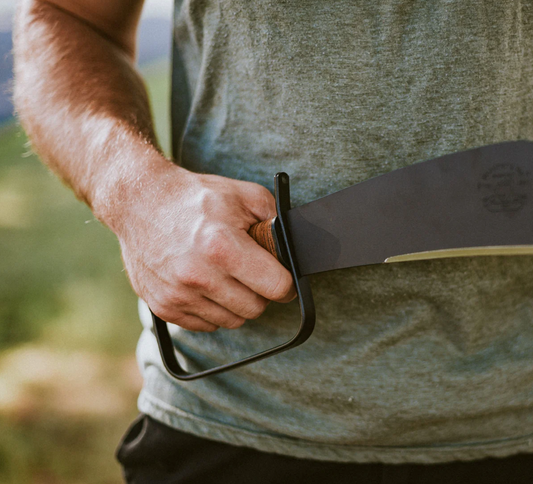
A purpose-built tool like the Woodman’s Pal is designed for controlled chopping, slicing, and clearing. Using it within its intended range helps preserve the edge and ensures consistent performance over time.
Sharpen Less by Sharpening Smarter
Good cutting technique means less frequent sharpening, but when the edge does need attention, keeping it tuned in the field makes all the difference.
These filed sharpening tips are not only efficient, but they also help maintain edge geometry rather than grinding it away:
- Touch up the edge early instead of waiting for it to go dull.
- Use light, consistent strokes.
- Maintain the original edge angle.
A compact field sharpening stone is an essential part of any machete kit, allowing quick touch-ups without removing unnecessary steel.
Technique and Maintenance Go Hand-in-Hand
Cutting cleanly, avoiding twists, and steering clear of grit all go a long way toward protecting your edge. Combine those habits with basic outdoor tool care and occasional sharpening, and your blade will stay reliable through years of hard use.
If you are looking to put these techniques into practice, explore the full line of Woodman’s Pal machetes and accessories, including our field-ready sharpening stone. The right combination of technique and gear makes all the difference when it comes to dependable performance in the field.