Blackberry brambles do not give up easily. What starts as a few thorny canes along a fence line, field edge, trail, or wooded border can quickly turn into a dense wall of tangled growth. The canes arch, root where they touch the ground, weave into nearby brush, and grab at clothing, gloves, and skin with sharp thorns.
That is why cutting blackberry brambles takes more than a basic pair of pruners or a lightweight yard tool. You need something that can reach into the mess, slice through tough canes, and help you work efficiently without putting your hands directly into the thorns.
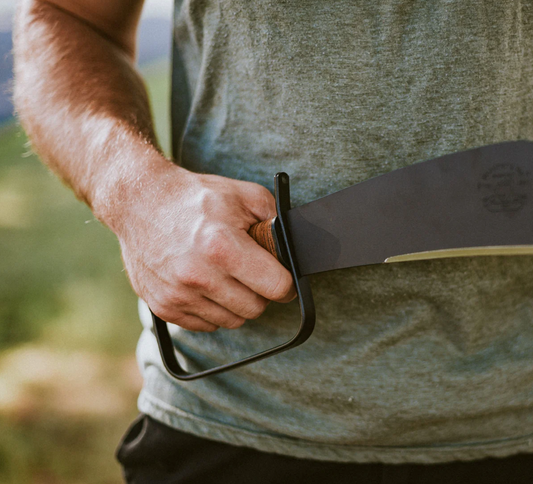
For property owners, hunters, campers, trail maintainers, and anyone tackling overgrown land, the Woodman’s Pal machete is built for this exact kind of work. With its forward-weighted blade, long reach, and proven land-clearing design, it gives you the cutting power and control needed to take on briars, brambles, vines, saplings, and thick brush with ease.
Why Blackberry Brambles Are So Hard to Remove
Blackberry plants are tough because they do not grow in neat, easy-to-handle clusters. They spread aggressively and create layered, tangled patches that are difficult to approach from any angle.
A mature bramble patch can include:
- Thick, woody canes that resist light cutting tools.
- Long, flexible stems that bend instead of breaking cleanly.
- Sharp thorns that catch on clothing and gloves.
- Canes that root where they touch the ground.
- Hidden deadwood, vines, and debris inside the patch.
- Uneven terrain beneath the growth.
This combination makes bramble removal frustrating and sometimes painful. Pruners can work for small canes, but they require you to get close to the plant. Loppers offer more leverage, but they can be awkward in dense, tangled growth. String trimmers may knock down lighter vegetation, but they often struggle with woody canes and can fling debris.
A good bramble-clearing tool needs to do three things well: cut cleanly, reach safely, and handle repeated impacts without feeling flimsy.
The Best Tool for Cutting Blackberry Brambles
The Woodman’s Pal machete stands out because it was designed as a serious land-clearing tool, not a single-purpose garden accessory. Its blade shape gives it the chopping power of a hatchet, the slicing action of a machete, and the brush-clearing usefulness needed for tangled vegetation.
When you are cutting blackberry brambles, the forward-weighted blade helps drive each swing through thick canes. Instead of relying only on arm strength, the tool’s balance adds momentum where you need it most. That makes it easier to cut through tough growth with fewer swings.
Its length also gives you valuable distance. Blackberry thorns are unforgiving, and keeping your hands farther from the canes matters. With the Woodman’s Pal machete, you can reach into the edge of the patch and cut canes back without grabbing every stem by hand.
How to Remove Brambles Safely and Efficiently
If you are wondering how to remove brambles without turning the job into a full-day battle, start with a clear plan. Dense blackberry growth is easiest to manage when you work from the outside in and break the job into smaller sections.
Wear the Right Protective Gear
Before cutting, protect yourself from thorns, flying debris, and hidden hazards. Wear heavy gloves, long sleeves, long pants, sturdy boots, and eye protection. Thorn-resistant gloves are especially useful when you need to pull cut canes away from the work area. Avoid loose clothing that can snag easily. Blackberry thorns are excellent at catching fabric, and getting tangled can make the job slower and more frustrating.
Start at the Outer Edge
Do not step directly into the middle of a bramble patch. Begin at the outside and cut the canes that are easiest to reach. This opens up space and lets you see what you are dealing with. Use controlled swings to slice through the canes near the base or at a manageable height. The Woodman’s Pal machete is especially helpful here because its reach lets you trim back the growth while keeping a safer distance from the thorns.
Cut Tall Canes Into Manageable Sections
Long blackberry canes can whip, snag, and tangle as they fall. Instead of cutting everything at ground level right away, reduce the height first. Cut the upper growth into smaller sections, then work down toward the base. This makes cleanup easier and helps prevent cut canes from grabbing onto surrounding branches, fencing, or other plants.
Clear the Cut Materials as You Go
Once the canes are cut, move them out of your way. A pile of thorny canes underfoot can create tripping hazards and make the next round of cutting harder. Use a rake, pitchfork, or gloved hands to move debris into a designated pile. The more organized you are during the cutting stage, the easier the final cleanup will be.
Address the Roots and Regrowth
Cutting down the canes is the first major step, but it may not fully solve the problem. Blackberry plants can regrow from crowns and roots, so long-term control may require digging out root crowns, mowing repeated regrowth, or using another appropriate removal method based on your property and goals. If your goal is full removal, revisit the cleared area regularly. New shoots are much easier to handle when they are young.
How to Get Rid of Briars Without Fighting the Thorns
Briars and brambles often grow in places where you already have limited access, such as fence lines, wooded trails, hunting paths, old fields, and property edges. The biggest challenge is that the thorns make it difficult to get close enough to cut safely.
That is where the Woodman’s Pal machete earns its place. Its long reach helps you work from a better position, while the blade’s cutting power helps you slice through tough, thorny canes without needing to grab each one first.
For briars that are mixed with vines or brush, our machete gives you more versatility than many standard yard tools. You can use it to clear a path into the growth, knock back overhanging canes, cut woody stems, and work around uneven terrain where larger equipment may not fit.
Why the Woodman’s Pal Machete Works Well for Bramble Removal
Whether you’re using the stacked leather handle with a steel knuckle guard or the ash wood handle with finger grooves option, each Woodman’s Pal machete is built for a variety of demanding outdoor work. It is handcrafted in America to Mil-Spec LC-14-B standards and has a long history dating back to the Pacific Theater as a dependable land-clearing tool. The current Woodman’s Pal machetes also include a premium leather sheath, a sharpening stone, and reprints of the original 1940s manuals, making them practical tools with heritage behind them.
The biggest advantages of using one of our machetes to clear blackberry brambles and briars are:
Forward-Weighted Cutting Power
The blade is designed to carry weight toward the front, giving each swing more authority. That added momentum helps the tool bite into thick blackberry canes, woody briars, and stubborn brush instead of bouncing off or requiring repeated light cuts. For dense patches where canes overlap and twist together, this forward-weighted design can make each swing feel more productive, helping you clear more growth with better control and less wasted effort.
Safer Reach Around Thorns
The tool gives you more distance than hand pruners or short garden knives. That extra reach matters when you are working around sharp, tangled growth because it helps keep your hands and forearms farther from the thorns. Instead of reaching directly into a bramble patch to grab and clip individual canes, you can work from the edge, cut back the outer growth, and gradually open up the area with more space between you and the briars.
Versatility in Thick Vegetation
Blackberry patches rarely contain only blackberry canes. They often include saplings, vines, weeds, dead branches, and other tangled growth that can slow the job down. Each Woodman’s Pal machete is made for mixed brush-clearing work, so you do not have to stop and switch tools every few minutes. As you work through a bramble patch, it can help you slice through thorny canes, knock back vines, and clear smaller woody growth with the same dependable tool in hand.
Built for Repeated Use
Bramble removal can take a lot of swings, especially when you are clearing a dense patch or working along a long fence line, trail, or property edge. A flimsy tool can wear you out quickly, lose effectiveness, or struggle to hold up under repeated contact with woody stems. Woodman’s Pal machetes are designed for durability and steady performance through demanding clearing jobs, making them a strong choice for property maintenance, trail work, camp clearing, and land management.
Tips for Cutting Blackberry Brambles More Effectively
A good tool makes a major difference, but good technique matters too. Keep these tips in mind as you work:
- Cut in sections instead of trying to remove the entire patch at once.
- Keep your footing stable before every swing.
- Work from the outside toward the center.
- Watch for hidden rocks, fencing, wire, or debris.
- Keep people and pets away from the work area.
- Sharpen and clean your blade after use.
- Dispose of cut canes properly so they do not create new hazards.
For larger patches, plan on multiple passes. The first pass knocks back the height and density. The second pass gets closer to the base. After that, you can focus on roots, cleanup, and controlling regrowth.
A Better Way to Take Back Overgrown Ground
Blackberry brambles and briars are tough, thorny, and persistent, but the right tool can make the work far more manageable. Instead of fighting the patch with tools that are too short, too light, or too limited, choose a land-clearing tool designed for demanding growth.
The Woodman’s Pal machete gives you the cutting power, reach, and control needed for cutting blackberry brambles, clearing briars, and opening up overgrown areas safely and efficiently. Whether you are maintaining trails, reclaiming a fence line, clearing hunting land, or cleaning up your property, it is a tool built to help you get the job done and keep going.
Shop for Woodman’s Pal machetes and bring a proven American-made land-clearing tool to your next brush-clearing project.