1. Model Identification & History
1.1. What is the historical origin of the Woodman's Pal tool and its connection to WWII?
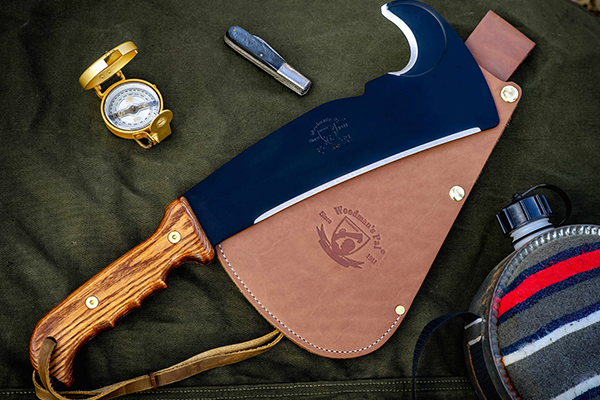
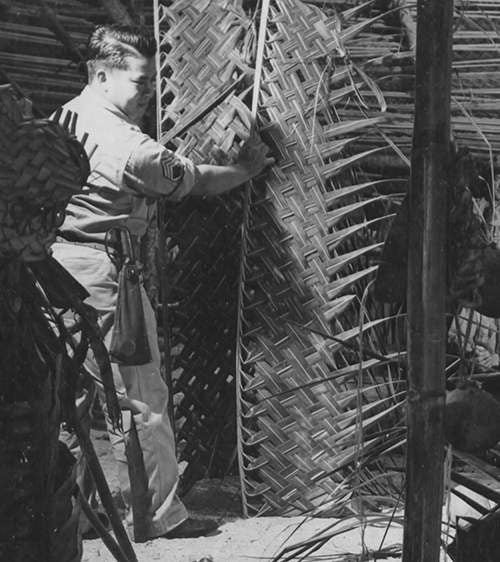
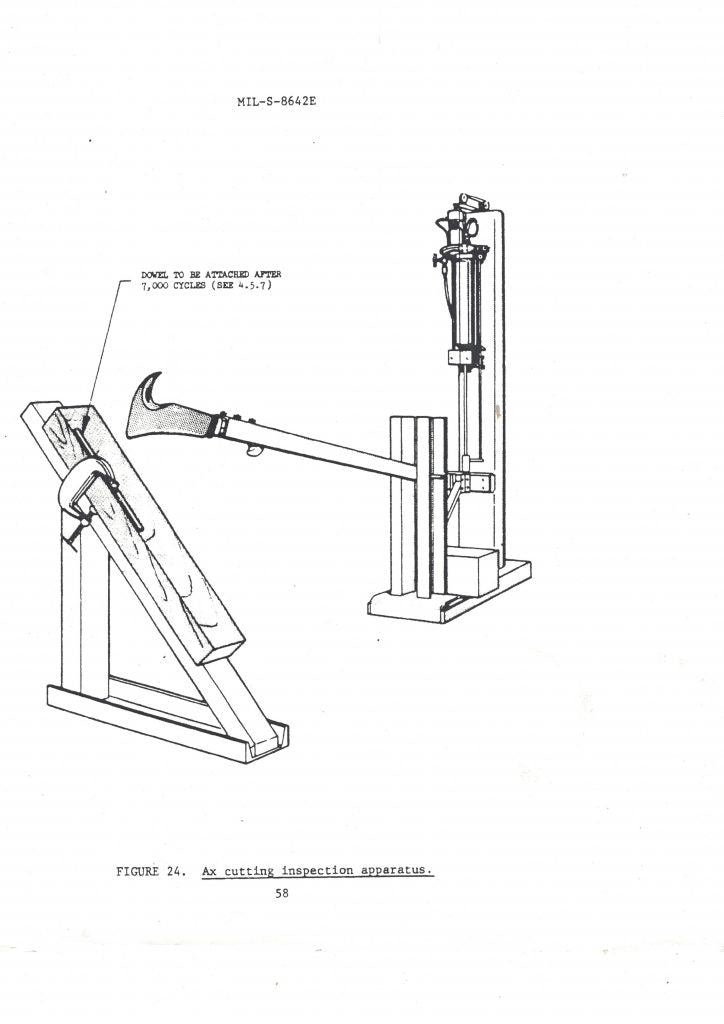
Originally designed in 1941 by Swiss-born engineer and passion-driven outdoorsman Frederick Olser, the Woodman's Pal quickly earned its place as an essential piece of American military and land-clearing equipment. Engineered specifically to tackle dense brush, forestry management, and field survival, the tool was formally adopted by the United States Armed Forces during World War II. Issued to army signal corps, aircrews, and infantry units in Pacific theaters, it proved invaluable for clearing drop zones, blazing trails through thick jungle canopy, and establishing defensive positions.
The tool’s legendary durability and field utility are enshrined in WWII combat records and personal soldier correspondence, including this historical testament from Pfc. Henry Luke, writing from an active theater in the South Pacific:
"... I have the knife with me at the present moment. I may add that besides my rifle and compass it is my most valuable possession and I cannot see how I could get along without it over here."
To this day, the Woodman's Pal remains an iconic symbol of American military heritage and survival engineering, trusted by generations of foresters, outdoorsmen, and survival experts.
1.2. How do I identify vintage models such as Model 284, Model 481, and LC-14-B, and what is the Victor Tool Company heritage?
The heritage of the Woodman's Pal was forged under the Victor Tool Company of Reading, Pennsylvania, which manufactured these tools throughout the mid-20th century for both government military contracts and civilian hardware markets. Collectors and owners can identify vintage specimens by examining specific physical markers, tang stampings, and handle configurations:
-
LC-14-B (Military Issue): This is the official military specification designation utilized during World War II and the Vietnam War era. Authentic LC-14-B models feature a heavy military brush-hook curvature, a full-tang high-carbon steel chassis, a steel handguard (or heavy leather D-guard), and distinct military blade stampings near the hilt. Original canvas or leather military scabbards often carry military stock numbers and instruction manuals folded inside the sheath pocket.
-
Model 284 & Model 481 (Civilian Commercial): Produced by the Victor Tool Co. for post-war forestry, farming, and retail distribution, these designations reflect specific handle and guard configurations. Model 284 typically features a classic stacked leather washer grip with a protective steel guard, while Model 481 variations featured custom hard-wood grips or specialized handguards designed for industrial clearing.
-
Victor Tool Company Stampings: Vintage tools carry clean blade stampings on the tang reading "Victor Tool Co. - Reading, PA" or specific patent numbers corresponding to the 1940s manufacturing patents.
- 1.3. Where are Woodman's Pal tools manufactured today?
Every Woodman's Pal is proudly handcrafted in the USA by master craftspeople in Pennsylvania. Honoring a 1940s toolmaking heritage, our artisans utilize domestic high-carbon steel forging, precision grinding, and hand-finished assembly. We maintain an uncompromising commitment to American manufacturing standards, ensuring that every tool leaving our Pennsylvania facility carries the same strength, balance, and lifetime reliability as the originals issued eight decades ago.
2. Product Functionality & Comparisons
2.1. What tasks is the Woodman's Pal designed for, and how does the sickle hook blade work?
The Woodman's Pal is engineered as a single, multi-functional tool capable of replacing an entire rack of traditional land-clearing implements, including axes, machetes, billhooks, and pruning saws. It excels at clearing dense thickets, felling saplings, trimming low-hanging tree branches, blazing wilderness trails, and processing campfire fuel.
The blade's performance relies on a unique dual-edge design:
-
Main Chopping Edge (Forward Weight Distribution): The sickle-shaped blade profile concentrates mass forward toward the tip. This optimal kinetic weight distribution generates powerful chopping torque, allowing the convex edge to slice effortlessly through saplings, hardwoods, and fibrous branches without causing wrist fatigue.
-
Sickle Hook Blade (Back Edge Pull Mechanics): Located on the upper back edge, the specialized brush hook is honed to a razor edge along its inner radius. Instead of requiring a wide, dangerous swing in tight quarters, the user simply hooks the blade behind thick vines, briars, unwanted undergrowth, or subterranean root networks and pulls backward. The pulling force pulls the foliage against the blade, severing stubborn material instantly at ground level.
2.2. How does the Woodman's Pal compare to traditional outdoor tools?
|
Tool Type
|
Primary Function
|
Advantages of Woodman's Pal
|
Limitations of Standard Tool
|
|
Traditional Machete
|
Light brush clearing
|
Substantial weight, multi-function hook, superior balance
|
Lacks hooking capability, thin blade flexes
|
|
Hatchet / Axe
|
Chopping/Splitting wood
|
Lighter, faster brush clearing, integrated hook blade
|
Overkill for brush, single-purpose edge
|
|
Standard Knife
|
Fine carving/utility
|
Heavy-duty chopping power and reach
|
Lacks leverage for brush and trees
|
|
Billhook
|
Hedging/Pruning
|
Multi-blade design (chopping edge + sickle hook)
|
Lacks dual-edge versatility
|
2.3. What do outdoorsmen and long-time users say about its performance?
For over eighty years, forestry professionals, outdoorsmen, and land managers have relied on the field-tested performance of the Woodman's Pal. A notable historic endorsement comes from Parker W. Morris of Tenawa Farm, North Carolina:
"To anybody who frequents the woods and the out-of-doors in general, the Pal is indispensible... I can but give the Pal my heartiest and sincere endorsement."
Modern owners echo this deep appreciation for traditional craft and indestructible build quality. Steph Boggs notes the tool's enduring legacy across generations:
"Even better than the one I bought out of the back of a Popular Mechanics, a lifetime ago. Thanks for keeping these things alive. Stellar quality and craftsmanship, quick shipping, an ideal experience all around."
Similarly, verified field user Hussien Dashti highlights its long-term utility in the wilderness:
"Very well made tool and exceptional quality. Definitely do not regret the purchase and this is one of those items that you can keep with you for a very long time with regular utilization."
3. Maintenance & Sharpening
3.1. How do I properly sharpen the main edge and sickle hook of my Woodman's Pal?
Proper edge geometry is essential to maximize cutting efficiency and prevent blade chipping during heavy impact work.
-
Main Chopping Edge: Maintain a 20 to 25-degree primary convex bevel. Secure the blade firmly in a vise or clamp. Using a medium-to-fine sharpening puck or flat stone, follow the natural curved contour from the base of the blade toward the tip. Push the stone across the bevel in smooth, overlapping strokes, maintaining the 20–25 degree angle equally on both sides until a fine wire edge (burr) is formed, then hone lightly to remove the burr.
-
Sickle Hook Blade: Do not use a wide flat stone on the inner curve of the hook. Utilize a narrow round stone, sharpening slipstone, or rounded puck that matches the inner concave radius. Follow the factory inner bevel, stroking in a smooth circular arc along the interior curve until razor sharpness is restored.
3.2. What is the best way to prevent rust on the carbon steel blade?
The blade is constructed from premium high-carbon steel, chosen for its superior edge retention and impact toughness compared to stainless steel. Carbon steel requires routine maintenance to prevent surface oxidation:
-
Clean Immediately After Use: Sap, vegetation acids, and soil moisture accelerate rust. Wipe down the blade to remove all resin, moisture, and plant material before storing.
-
Thorough Drying: Wipe the metal entirely dry with a clean shop rag. Never sheathe a wet blade.
-
Apply Protective Barrier: Wipe a thin layer of gun oil, mineral oil, or specialized rust-inhibiting blade wax over all exposed metal surfaces. For long-term storage in humid environments, re-apply oil periodically.
3.3. How should I care for the leather handle and sheath?
- Our original stacked leather washer grips and heavy-duty leather sheaths are crafted from premium full-grain leather designed to last a lifetime when properly maintained:
-
Cleaning: Brush away dried dirt and mud with a soft brush or slightly damp cloth. Avoid harsh chemical cleaners or detergents.
-
Drying: If the leather grip or sheath becomes soaked in the field, allow it to air-dry slowly at room temperature. Keep it away from direct heat sources such as campfires, heaters, or direct sunlight, which can dry out and crack natural leather.
-
Conditioning: Apply a high-grade leather wax or oil-based conditioner twice a year (or after severe weather exposure) to keep the stacked leather washer grip sealed, supple, and water-resistant.
4. Purchasing, Warranty & Shipping
4.1. What product options and accessories are available, and what are their prices?
We offer our handcrafted flagship tools alongside a curated collection of complementary outdoor leather goods and American-made lifestyle tools:
Primary Blades & Sheaths:
-
Woodman's Pal Machete / Stacked Leather Machete: $149.95 (Iconic dual-edge high-carbon steel tool with classic stacked leather grip)
-
Leather Sheath: Premium handcrafted protective leather sheath for belt transport and blade safety
Complementary Heritage Goods & Tools:
-
Leather Tool Bag Tote: From $129.95 (Heavy-duty leather utility carrier)
-
Leather Log Carrier: $149.95 (Reinforced full-grain leather firewood tote)
-
Gardening Hoe: $199.95 (Heavy-duty long-handled land and garden management hoe)
-
Adirondack Pack Basket: $349.95 (Handcrafted traditional wilderness pack basket)
-
Horse Collar Mirror: $399.95 (Luxury leather, wood, and brass equestrian wall mirror)
4.2. Does Woodman's Pal ship internationally?
Yes. Woodman's Pal tools are shipped to wilderness enthusiasts, military personnel, and collectors worldwide. Our online storefront supports seamless localized checkout across global currencies and destinations:
-
North America: United States (USD $), Canada (CAD $)
-
Europe: United Kingdom (GBP £), European Union nations (EUR €—including Austria, Belgium, Finland, France, Germany, Ireland, Italy, Netherlands, Portugal, Spain), Czechia (CZK Kč), Denmark (DKK kr.), Norway (USD $), Poland (PLN zł), Sweden (SEK kr), Switzerland (CHF CHF)
-
Asia-Pacific: Australia (AUD $), New Zealand (NZD $), Japan (JPY ¥), Hong Kong SAR (HKD $), Singapore (SGD $), South Korea (KRW ₩), Malaysia (MYR RM)
-
Middle East: United Arab Emirates (AED د.إ), Israel (ILS ₪)
4.3. What are the terms of the Woodman's Pal Lifetime Warranty?
Every Woodman's Pal is backed by our Lifetime Warranty. We guarantee our handcrafted tools against all defects in materials and craftsmanship. If your tool fails or displays a manufacturing defect under normal field operating conditions, our support team will repair or replace the product.
5. Safety & Handling
5.1. What are the proper grip techniques and swing mechanics for safe operation?
-
Grip Alignment: Wrap your hand firmly around the narrow center section of the stacked leather grip. Keep your wrist locked and rigid in line with your forearm. Never loosen your grip during mid-swing.
-
Kinetic Swing Mechanics (Chopping): Allow the forward weight of the high-carbon steel head to generate the cutting force. Swing downward diagonally at a 45-degree angle against brush or branches rather than striking straight onto flat wood, letting the convex bevel slice through material cleanly.
-
Pulling Mechanics (Sickle Hook): Place the inner curve of the rear hook behind the target vine, root, or branch. Keep your off-hand placed firmly behind your body or on your hip, and pull the hook back in a direct, controlled line toward your shoulder.
5.2. How should the Woodman's Pal be safely transported and stored in the field?
-
Immediate Sheathing: Place the blade into its fitted leather sheath immediately upon completing work. Never carry an unsheathed Woodman's Pal in your hand while walking through rugged terrain.
-
Pack & Belt Transport: Ensure all metal sheath snaps and retaining straps are fully engaged before attaching the tool to a belt or packing it inside a rucksack.
-
Field Staging: Never leave an exposed blade lying on the ground, buried in leaf litter, or embedded in a tree trunk where it creates an immediate hazard for fellow camp members.
5.3. What general outdoor tool safety precautions should be followed?
-
Maintain a Clear Safety Zone: Before swinging, establish a clear safety circle around your working radius, minimum two arm lengths plus the length of the tool in all directions, free of bystanders, children, and pets.
-
Inspect Overhead and Ground Hazards: Check overhead for dead branches ("widowmakers") or tangled vines that could catch the blade during a backswing, and inspect the ground for rocks that could cause edge deflections.
-
Perform Tool Pre-Inspection: Inspect the handguard, full-tang hilt, stacked leather grip, and blade before every work session to confirm all components are tight and structurally sound.
-
Wear Required PPE: Always wear heavy leather work gloves and shatterproof protective eyewear during land clearing and wood processing.
-
Campsite Storage: Store sheathed tools elevated off the ground and safely out of reach of children when relaxing around a campsite or storing gear overnight.