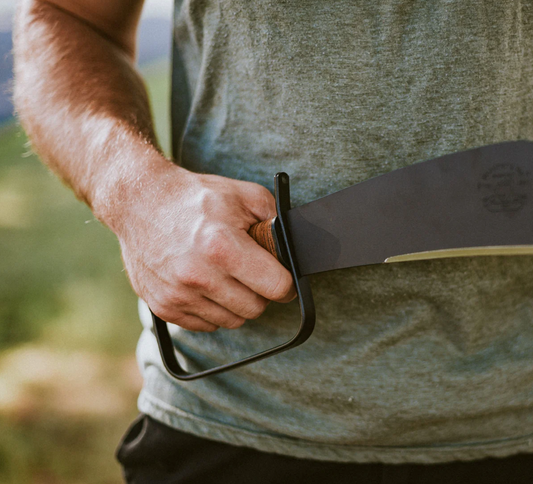
A machete is one of the oldest and most reliable outdoor tools in the world. Long before modern power equipment, people relied on machetes to clear land, maintain trails, and manage dense vegetation efficiently.
Today, the machete remains a practical land-clearing tool, especially for property owners, outdoor enthusiasts, and anyone building a basic set of survival gear for beginners.
If you’ve never used one before, though, a machete can feel intimidating. This beginner machete guide covers machete basics from the ground up, including how to use a machete safely, proper stance and swing mechanics, what materials it’s designed to cut (and what it isn’t), and why a quality machete sheath and routine maintenance are essential for safe ownership.
Understanding Machete Basics
At its core, a machete is designed for controlled cutting, not brute-force chopping. Its long blade allows you to clear vegetation efficiently with sweeping motions, making it ideal for:
- Clearing overgrown brush and weeds.
- Cutting vines, tall grass, and undergrowth.
- Maintaining trails and wooded paths.
- Yard and property maintenance.
- Outdoor preparedness and emergency use.
- Cutting kindling and firewood.
Unlike an axe, a machete excels at repetitive, controlled cuts through flexible or fibrous material. Understanding this distinction is a foundational part of outdoor tool safety and helps prevent misuse.
Choosing a Machete as a First-Time User
When choosing a machete, beginners should focus on balance, grip comfort, and durability rather than blade length alone. A well-balanced machete improves control, reduces fatigue, and allows safer cutting techniques.
Woodman’s Pal machetes are especially well-suited for beginners because they combine machete-style cutting with the chopping strength of a compact axe head. Two excellent options include our:
- Stacked Leather Machete: Built for clearing brush, vines, and small saplings, this tool offers a comfortable grip and excellent cutting control. It comes with a durable leather sheath for safe transport and storage.
- Wood Machete: Featuring a solid wood handle and a rugged blade design, this machete provides versatility for outdoor work while maintaining balance and safety for newer users. It also includes a protective leather sheath.
For beginners, starting with a reliable, well-crafted tool reduces guesswork and encourages safer habits.
Machete Safety Tips You Should Never Skip
Before making your first cut, it’s important to understand essential machete safety tips. A machete is powerful, and safe handling should always be intentional.
Key machete safety practices include:
- Wear sturdy footwear, long pants, and gloves.
- Keep a clear safety radius. No one should stand within your swing zone.
- Always cut away from your body.
- Maintain a firm, dry grip on the handle.
- Never swing blindly into thick or unknown material.
Treating a machete as a precision tool, not a hacking instrument, dramatically reduces the risk of injury.
Proper Stance for Safe Machete Cutting Techniques
Your stance is the foundation of control, accuracy, and injury prevention when using a machete. Many beginner accidents happen not because the tool slips, but because the user is off-balance or poorly positioned. Developing good stance habits early is a core part of safe cutting techniques.
Start by positioning your feet slightly wider than shoulder-width apart to create a stable base. Keep your knees slightly bent, not locked, to allow your body to absorb motion and adjust quickly if needed. Your weight should be evenly distributed, with a slight bias toward your back foot to help control follow-through.
Angle your body so you are never cutting straight toward your legs or torso. The blade should travel across your body and away from your centerline. This positioning reduces the risk of injury if the blade glances off the material or continues past the cut.
Equally important is awareness of your surroundings. Always establish a clear cutting zone in front of you, free of rocks, roots, or hidden obstacles that could deflect the blade. A strong stance combined with situational awareness gives you better balance, more precise control, and the ability to stop or redirect a swing if something doesn’t feel right.
How to Use a Machete
Learning how to use a machete effectively is less about power and more about efficiency. Beginners often assume harder swings equal better results, but controlled technique is what makes a machete safe and effective.
Begin each cut with a relaxed grip. It should be firm enough to maintain control, but not so tight that it causes fatigue. Swing from the shoulders and hips rather than just the arms, allowing your body to guide the blade naturally. The motion should be smooth and fluid, not jerky or forced.
Instead of chopping straight down, use angled, glancing cuts that slice through vegetation. This slicing action allows the blade edge to do the work, reducing resistance and minimizing the chance of the blade bouncing or sticking. For thicker brush or small saplings, use multiple controlled strikes rather than a single heavy swing.
Avoid overhead swings entirely, as they reduce control and increase the risk of losing balance. Keep your swings within a comfortable range where you can easily stop or redirect the blade mid-motion if needed. With practice, proper mechanics improve accuracy, reduce fatigue, and make extended work sessions far safer.
What a Machete Is Designed to Cut (and What It Isn’t)
Understanding what a machete is, and is not, designed to handle is a critical part of machete basics. Using the tool correctly protects both the blade and the user.
A machete excels at cutting flexible, fibrous materials. These include brush, weeds, vines, tall grasses, and small saplings. It’s also effective for light wood clearing tasks, such as cutting thin branches for kindling or clearing a path through overgrown terrain. In these situations, the blade slices cleanly and predictably.
What a machete should not be used for is just as important. Thick hardwood logs, dry or seasoned lumber, and dense knots place excessive stress on the blade and can cause dangerous deflection. Striking metal, wire, or fencing can chip or damage the edge instantly. Rocks, roots, and ground-level debris are especially hazardous, as they can cause the blade to glance unpredictably.
Using the machete within its intended limits keeps the tool sharp, effective, and far safer to operate over time.
The Importance of a Machete Sheath
A machete sheath plays a critical role in safe handling, transport, and storage. When the blade isn’t actively in use, it should always be secured in a sheath to prevent accidental contact.
A proper sheath protects the edge from damage and shields the user from cuts while carrying, transporting, or storing the tool. This is especially important for beginners, who are still developing safe handling habits. Even a stationary machete left unattended can pose a risk without a sheath.
Every Woodman’s Pal machete includes a durable leather sheath that is designed specifically for their blade profiles. These sheaths allow the machete to be carried securely while keeping the edge covered and protected. Whether you’re moving between work areas or storing your tool after use, a sheath reinforces safe routines and reduces unnecessary risk.
Basic Maintenance for Long-Term Safety
Routine maintenance is a key part of outdoor tool safety and directly impacts how safely a machete performs. A neglected blade is harder to control and more likely to slip or bind during use.
After each session, remove dirt, sap, and plant residue from the blade using a cloth or brush. Moisture left on the steel can lead to rust, so drying the blade thoroughly is essential. Applying a light coat of oil before storage helps protect the metal and keeps the edge in good condition.
Sharpening should be done regularly but conservatively. A properly sharpened machete cuts cleanly with minimal force, reducing strain on the user and lowering the risk of uncontrolled swings. Dull blades require more effort, increasing fatigue and the chance of mistakes.
Consistent care keeps your machete reliable, effective, and safer to use—especially for those still gaining experience.
Build Confidence with the Right Machete
A machete doesn’t have to be intimidating. With proper education, safe cutting techniques, and a well-made tool, beginners can use a machete confidently and responsibly.
Whether you’re managing overgrown property, maintaining trails, or assembling practical survival gear for beginners, starting with a dependable, well-balanced machete makes all the difference.
Shop Woodman’s Pal machetes and accessories to find high-quality tools designed for real outdoor work and built with safety, durability, and performance in mind.